
When Tracking Your Fitness Helps… and When It Hurts
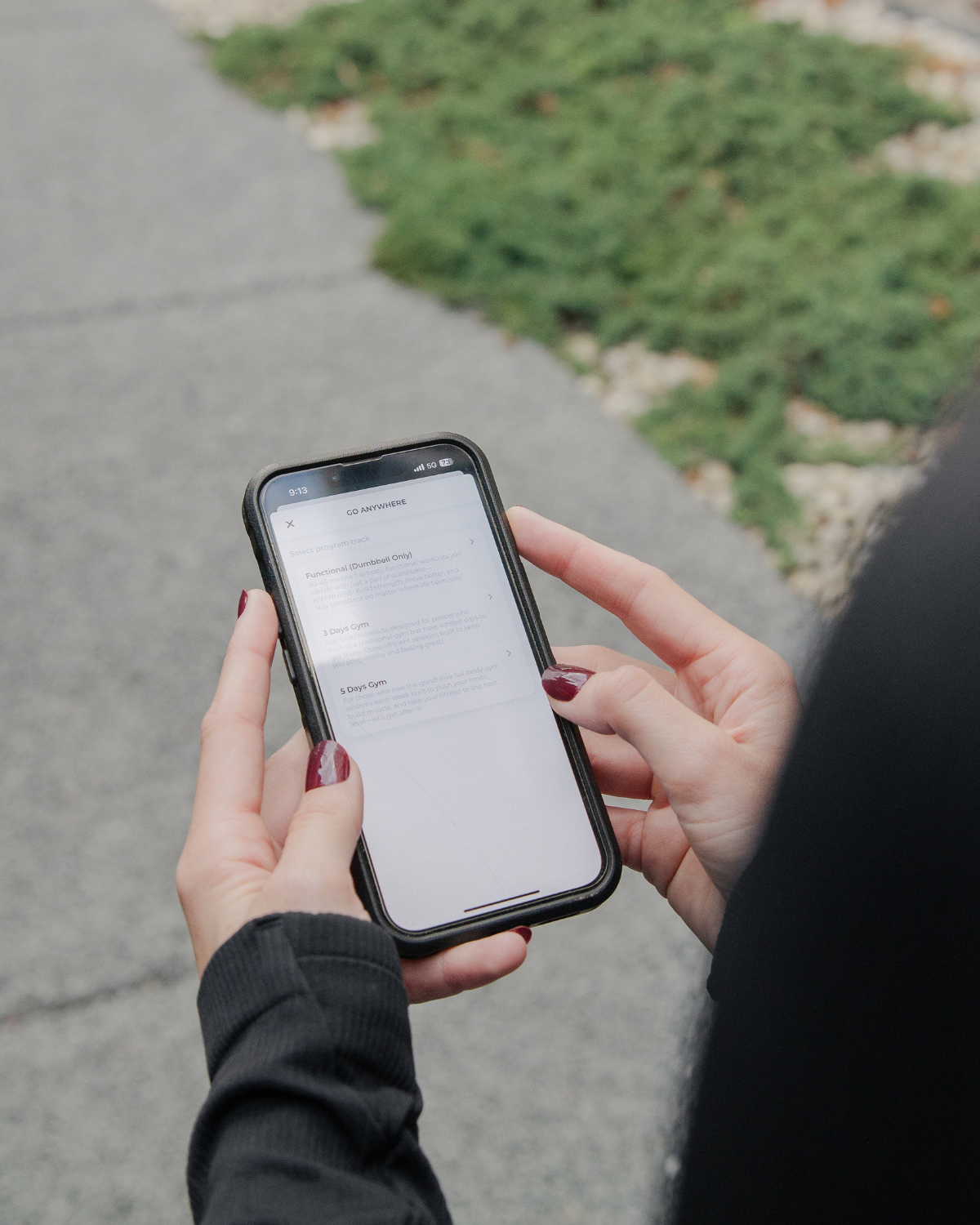
There’s something comforting about having the numbers. Steps hit, workouts logged, sleep scores in the green—it can make you feel like you’re doing things right. Like you have clarity, control, and a clear sense of progress. And in many cases, that’s exactly what tracking provides.
But at some point, for many of us, it can start to feel like a lot.
Why We Rely on Fitness Tracking
We live in a time where almost everything can be measured. Heart rate, recovery, macros, calories, sleep, movement—there’s no shortage of data available to us. While that can be incredibly helpful, there’s also a tipping point where more information doesn’t actually create more clarity. It creates noise. Instead of feeling more in tune with your body, you might find yourself second-guessing it. Instead of asking “How do I feel?” you start asking “What do the numbers say?”
The truth is, tracking itself isn’t the problem. In the right season, it can be a really powerful tool.
When Tracking Supports Your Goals
For many people, tracking builds awareness. It helps you see patterns you might otherwise miss—how your sleep impacts your energy, how your recovery affects your workouts, how consistency compounds over time. Research has shown that wearable health tracking can support long-term behavior awareness and help individuals better understand trends in their physical and mental health (National Institutes of Health, 2024). When used this way, tracking becomes less about perfection and more about insight.
It can also create structure, especially if you’re just getting started or rebuilding consistency. It gives you a place to begin and a way to measure progress beyond just how you look or feel day-to-day. In some cases, it can even improve performance. Metrics like heart rate variability (HRV) can help guide training intensity and recovery, allowing you to adjust your workouts based on what your body may need. Organizations like NASM highlight the value of using this kind of data to avoid overtraining and support long-term progress (NASM, 2026).
But where things start to shift isn’t in the tool—it’s in how we relate to it.
When Tracking Starts to Work Against You
One of the biggest downsides of tracking is that it can slowly disconnect you from your own body. When everything is measured externally, internal awareness can take a back seat. You might feel energized and ready to train, but your recovery score says otherwise. Instead of trusting yourself, you pause, or doubt, or override what you’re feeling. Over time, this can weaken your ability to interpret your own cues, which is a key part of sustainable wellness.
Tracking can also create anxiety, especially for those who tend to be more detail-oriented or perfection-driven. The numbers themselves are neutral, but the meaning we attach to them isn’t. A low score can feel like failure. A missed goal can feel like falling behind. What started as a tool for awareness can quietly turn into pressure.
It’s also important to remember that the data isn’t perfect. Even the most advanced devices have limitations, especially when it comes to things like calorie burn, sleep stages, and recovery scores. These tools are best used for identifying general trends, not as exact measurements. Treating them as absolute truth can lead to unnecessary stress or misinformed decisions.
And sometimes, it’s simply too much. More data doesn’t always lead to better outcomes. In many cases, it just creates more decisions, more mental load, and more opportunities to feel like you’re not doing enough.
Finding Balance Between Data and Intuition
So the real question isn’t whether you should track your fitness. It’s how you respond to tracking.
Because two people can use the exact same tool and have completely different experiences. For one person, it creates structure, awareness, and consistency. For another, it creates pressure, obsession, and disconnection.
Personally, I believe there is a time and place for tracking. It can be incredibly helpful when you’re building habits, looking for more structure, or trying to better understand your body. But it requires a level of honesty with yourself. You have to know your tendencies. If you’re someone who becomes obsessive, ties your worth to performance, or feels thrown off by “bad” numbers, tracking may not support you the way you think it will—or at the very least, it needs to be used with intention.
A More Sustainable Approach to Wellness
A healthier approach is to treat tracking as a guide, not a rule. Focus on trends over time instead of daily fluctuations. Check in with yourself before checking your data. And most importantly, be willing to step away from it when needed. You don’t have to track forever. In fact, one of the most valuable skills you can build is the ability to move, eat, and rest without needing constant external validation.
At the end of the day, wellness was never meant to feel this complicated. Tracking can support you, but it can also distract you if you’re not careful. The goal isn’t perfect data—it’s feeling strong, energized, grounded, and at home in your body.
And sometimes, the most important feedback you have isn’t on your watch.
It’s within you. 🤍
XO,
Coach Caroline
Up Next
Here are a few more posts we think you’ll love:
What if staying active this summer was simpler than you think? Learn the mindset shift that helps you move more consistently, enjoy exercise, and build healthy habits without the pressure of perfect workouts.